Battery terminology can make choosing an electric three wheeler for disabled users unnecessarily confusing. Buyers may encounter different battery chemistries, capacities and claimed ranges without knowing which numbers actually matter.
The simplest solution is to connect battery selection directly to the user's routine.
Begin With Daily Kilometres
Estimate how far the vehicle will travel on an ordinary day rather than the longest journey imaginable.
Include the complete return journey.
For example, if a rider regularly visits local shops, a workplace, a clinic and relatives within Nashik, calculate the approximate weekly pattern and identify the busiest normal day.
Then allow a sensible reserve rather than planning to exhaust the battery completely.
Understand Stated Range
Published range figures provide a useful reference, but they should not be treated as a guarantee of identical real-world performance.
Factors that can affect range include:
Rider weight
Additional load
Frequent acceleration
Road gradients
Stop-and-go traffic
Tyre pressure
Battery age and condition
Riding speed
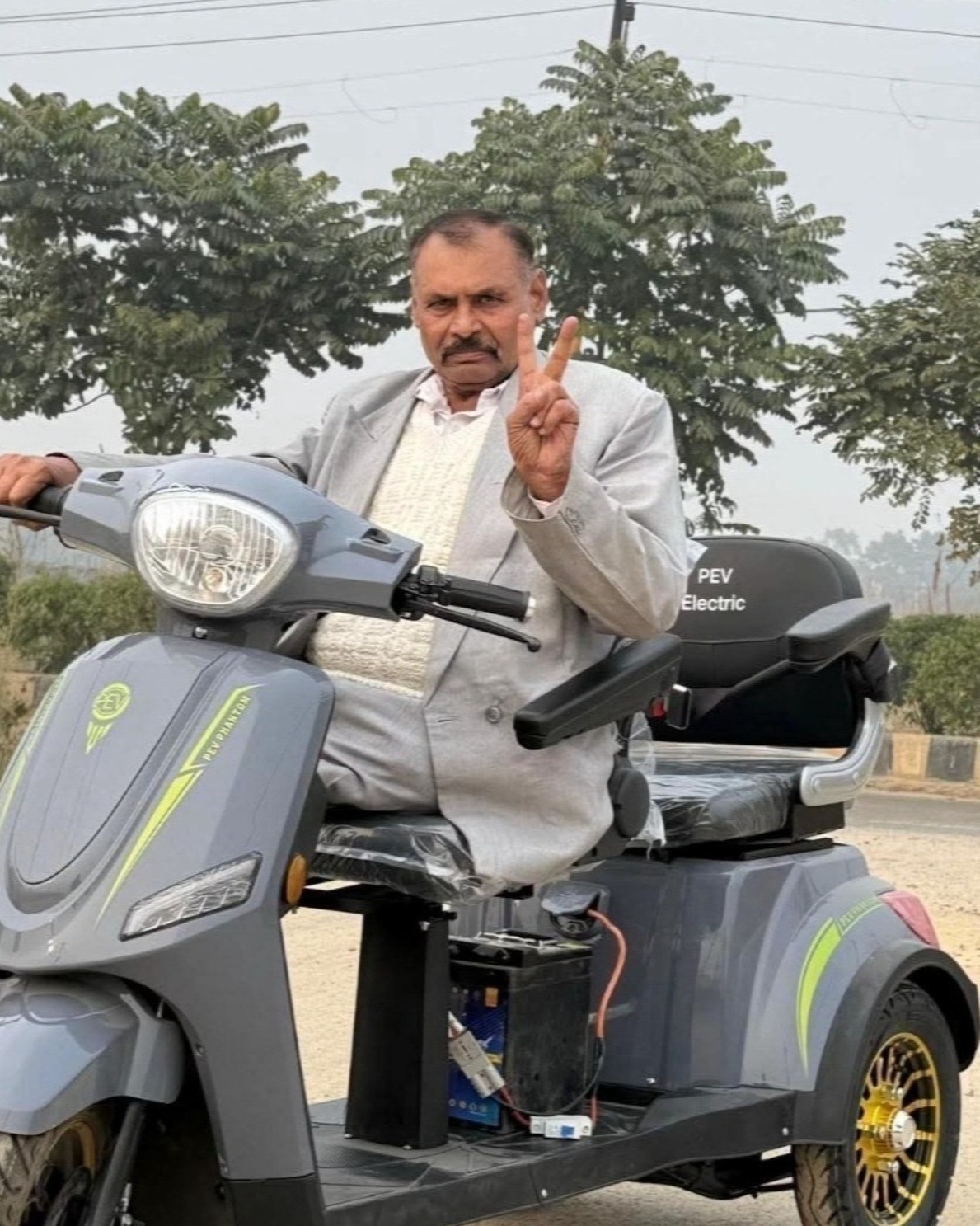
VINAYAK AUTO's Phantom E listing includes gel and lithium-ion battery choices associated with several stated travel ranges.
This gives buyers options, but the appropriate configuration depends on how the vehicle will actually be used.
Think About Charging Frequency
A person travelling relatively short distances may be able to maintain a straightforward home-charging routine.
Someone travelling farther may require a higher-capacity configuration or more frequent charging.
The important point is predictability.
A mobility vehicle should ideally be ready when the rider needs it, rather than creating constant uncertainty about remaining charge.
Electricity Consumption Also Matters
The Phantom E information published by the provider states electricity consumption of approximately 1.5 units per charge for the listed configuration.
Actual electricity usage and charging cost will depend on the vehicle configuration, battery, charging behaviour and applicable electricity tariff.
When comparing ownership costs, buyers should use the specifications of the exact model they intend to purchase.
Battery Type Should Not Be Chosen by Range Alone
Ask about:
Battery warranty
Recommended charging method
Expected maintenance
Replacement availability
Replacement cost
Charger specifications
These considerations can matter just as much as initial range.
Plan Charging Around the User
For a disabled rider, charging arrangements should not introduce a new accessibility problem.
The parking position and charging point should allow the routine to be managed safely and conveniently by the rider or caregiver.
This is particularly relevant in apartment complexes or shared parking environments around Nashik.
Ask Model-Specific Questions
Avoid assuming that information for one electric three-wheeler applies to every model.
VINAYAK AUTO carries multiple electric three-wheeler configurations, and its published product information shows variation in battery choices and features.
A useful battery decision therefore starts with three numbers: normal daily distance, desired reserve and realistic charging frequency.
Once those are known, buyers can evaluate battery and range specifications in context rather than simply selecting the largest figure available.
For electric mobility users in Nashik, that approach can lead to a vehicle that is easier to keep charged, easier to plan around and better suited to regular everyday travel.